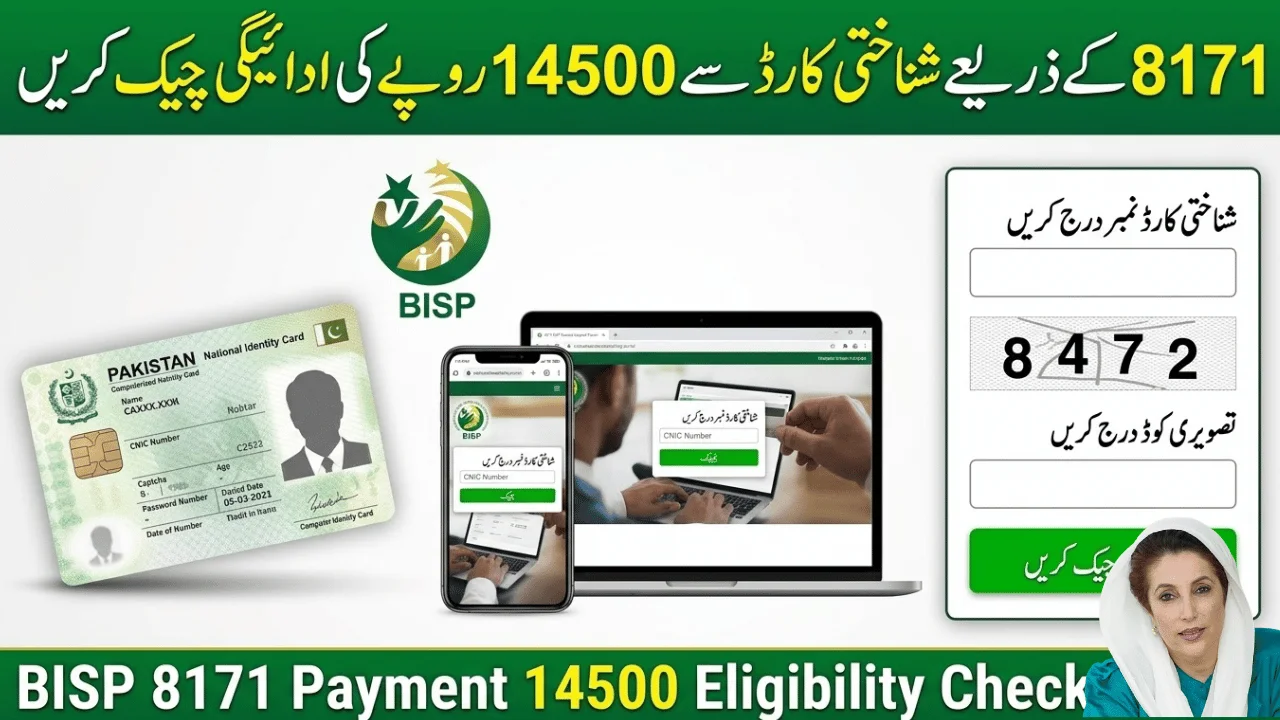
For many families in Pakistan, BISP payments are not just financial support—they are essential for survival. These funds help cover groceries, school expenses, and daily needs. But what happens when the payment is delayed, missing, or incorrect?
Until recently, beneficiaries had to visit BISP Tehsil offices, wait in long queues, and often return without clear answers. This process was time-consuming, costly, and frustrating—especially for women and elderly citizens.
To solve this, the government introduced the BISP WhatsApp complaint method 2026, allowing beneficiaries to report issues directly from their mobile phones. This system is part of Pakistan’s growing digital welfare infrastructure, designed to make support faster, more transparent, and accessible for everyone.
In this guide, you’ll learn how to use the WhatsApp complaint system properly, what problems you can report, and how to get your issue resolved without unnecessary delays.
What Is the BISP WhatsApp Complaint Method 2026
The BISP WhatsApp complaint system is a digital support channel that allows beneficiaries to submit complaints related to payments, eligibility, and verification issues using WhatsApp.
Instead of visiting an office, you can now:
-
Report payment delays
-
Fix CNIC verification problems
-
Correct eligibility errors
-
Track complaint updates
This system connects directly with BISP’s internal database, helping officials respond faster and more efficiently.
Why This System Matters in 2026
The introduction of WhatsApp support reflects a major shift toward digital governance in Pakistan.
Key reasons behind this system
-
Reduce overcrowding at BISP offices
-
Provide support to rural and remote areas
-
Speed up complaint resolution
-
Improve transparency in welfare payments
In 2026, more beneficiaries are using smartphones, making WhatsApp an ideal platform for quick communication.

Step-by-Step Guide to File a BISP Complaint on WhatsApp
Submitting a complaint is simple, but doing it correctly can significantly speed up the response time.
Step 1: Save the Official BISP WhatsApp Number
Always use the official number provided by BISP. Avoid random numbers shared on social media to prevent scams.
Step 2: Start a WhatsApp Chat
Open WhatsApp and start a conversation with the saved contact.
Step 3: Send Your CNIC Number
Type your 13-digit CNIC number clearly.
Example:
CNIC: 35202XXXXXXXX
Step 4: Clearly Describe Your Issue
Be specific about your problem.
Examples:
-
Payment not received
-
Payment amount incorrect
-
Eligibility showing wrong status
-
CNIC verification pending
The clearer your message, the faster it can be processed.
Step 5: Attach Supporting Proof (If Available)
Adding proof can speed up your complaint resolution.
Attach:
-
CNIC photo

-
Payment SMS screenshot
-
Bank receipt or slip
Step 6: Send and Wait for Response
After sending your complaint, you will usually receive a response within 48 to 72 hours.
Common Issues You Can Report via WhatsApp
The WhatsApp system is designed to handle the most frequent problems faced by beneficiaries.
Most reported issues
| Issue | Explanation |
|---|---|
| Payment not received | Funds not delivered despite eligibility |
| Wrong payment amount | Received less than expected |
| CNIC verification error | Identity mismatch or pending verification |
| Missing SMS notification | Payment ready but no message received |
| Eligibility error | Incorrectly marked as ineligible |
Real-Life Example: Why This System Is Helpful
Imagine a woman in a rural village who depends on BISP payments. Earlier, she had to travel several kilometers to a Tehsil office just to file a complaint.
Now, with WhatsApp:
-
She sends her CNIC and issue from home
-
Receives a response within a few days
-
Avoids travel costs and long waiting times
This simple change has made a huge difference in accessibility and convenience.
Tips to Get Your Complaint Resolved Faster
Many complaints get delayed due to incomplete or incorrect information.
Follow these expert tips
-
Always use your registered mobile number
-
Double-check your CNIC before sending
-
Write a clear and short issue description
-
Attach proof whenever possible
-
Avoid sending multiple messages repeatedly

These small steps can significantly improve response time.
Alternative Ways to Contact BISP
Although WhatsApp is convenient, there are other methods available if needed.
1. BISP Helpline
-
Call: 0800-26477
-
Speak directly with support staff
2. 8171 Web Portal
You can check:
-
Payment status
-
Eligibility details
-
Registration updates
3. Visit BISP Tehsil Office
For complex issues, visiting the office may still be necessary.
Bring:
-
Original CNIC
-
Registered mobile number
-
Payment proof
Pros and Cons of BISP WhatsApp Complaint System
Advantages
-
No need to visit offices
-
Faster response time
-
Easy for rural users

-
Transparent complaint tracking
-
Available anytime
Limitations
-
Requires smartphone and internet
-
Response time may vary
-
Complex cases may still need office visit
Overall, it is a major improvement compared to traditional complaint systems.
FAQs
How long does it take to resolve a BISP WhatsApp complaint?
Most complaints are addressed within 48 to 72 hours, depending on the issue.
Is the WhatsApp complaint service free?
Yes, you only need internet access. There are no extra charges from BISP.
Can I send multiple complaints at once?
It’s better to send one clear message with complete details to avoid confusion.
What if I don’t get a response?
Wait for 2–3 days, then follow up or contact the BISP helpline.
Is it safe to share CNIC on WhatsApp?
Yes, but only send it to the official BISP WhatsApp number.
Conclusion
The BISP WhatsApp complaint method 2026 is a game-changer for beneficiaries across Pakistan. It removes the need for long travel, reduces waiting times, and provides a simple way to report payment issues directly from home.
For families who depend on BISP support, this system offers faster problem resolution and greater transparency. By following the correct steps and providing accurate information, you can ensure your complaint is handled quickly and efficiently.
As Pakistan continues to digitize its welfare programs, tools like this are making government support more accessible, reliable, and user-friendly for millions of people.